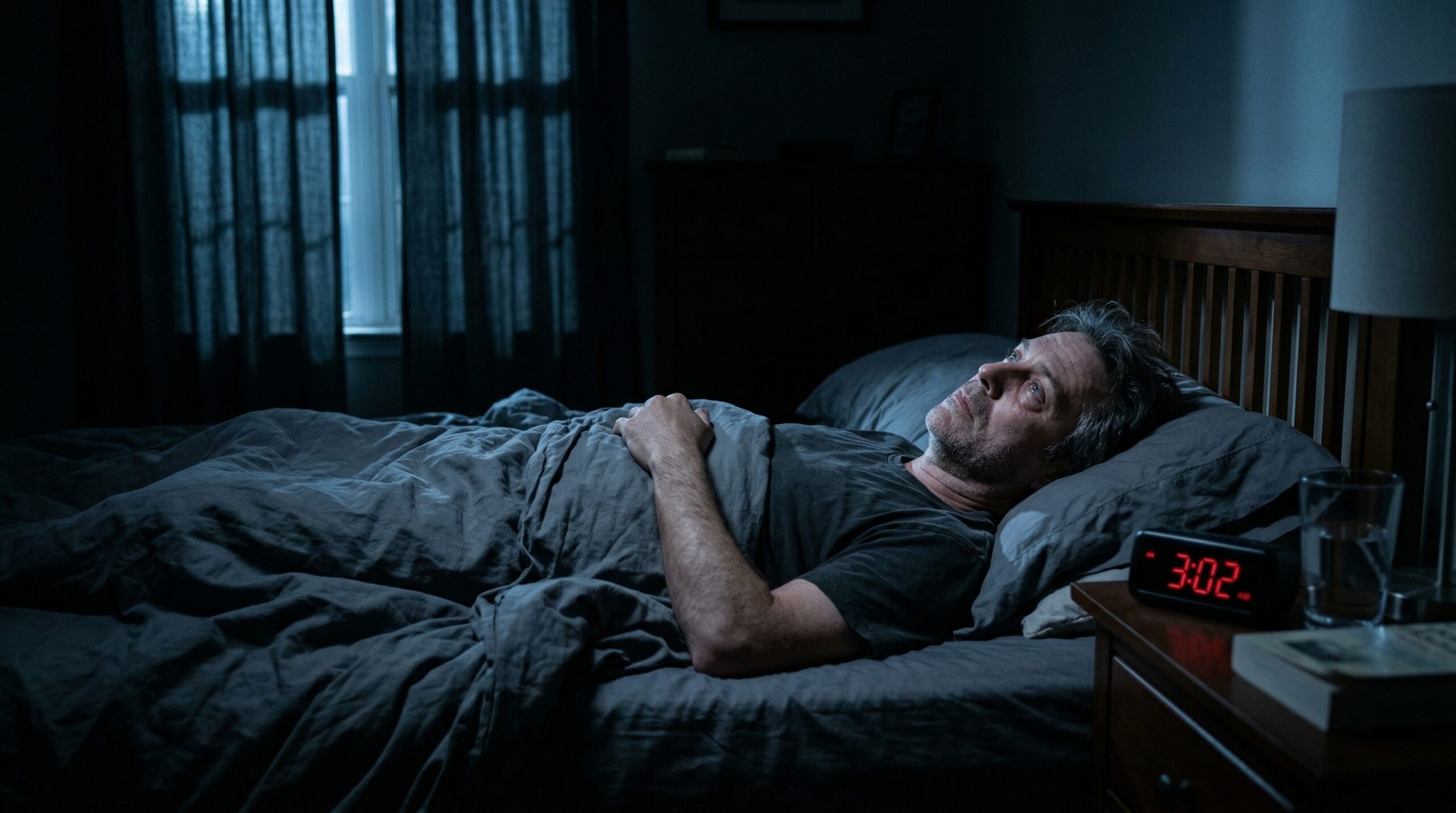
Why Do Middle-Aged People Wake Up Exhausted Even After a Full Night’s Sleep?
You go to bed on timeYou even clock a full eight hoursYet somehow, the morning alarm still feels like a personal attack — and you drag yourself through the day running on emptyIf this sounds familiar, you are not alone.
Research consistently shows that middle-aged adults between the ages of 40 and 60 are among the most sleep-deprived groups — not because they sleep too little, but because the quality of their sleep quietly deterioratesThe number of hours on the clock means far less than what is actually happening inside those hours.
Key insight: Sleep quality, not just sleep duration, is the true measure of how rested middle-aged people feel the next dayMore hours in bed does not automatically mean more recovery.
The Hidden Pain Points: What Quietly Steals Sleep Quality in Your 40s and 50s
How Hormonal Changes Disrupt Deep Sleep for Middle-Aged Adults
Starting in the mid-40s, natural shifts in cortisol, melatonin, and sex hormones begin to alter sleep architectureThe body produces less deep slow-wave sleep — the most physically restorative stage — and spends more time in lighter sleep phasesThe result is waking up feeling like you barely slept, even when the clock says otherwise.
For middle-aged women, perimenopause and menopause introduce night sweats and temperature fluctuations that fragment sleep repeatedly throughout the nightFor middle-aged men, declining testosterone levels correlate with more nighttime awakenings and less REM sleep.
Why Stress and Overthinking Are the Number-One Sleep Enemies for Middle-Aged People
Career pressures, financial responsibilities, aging parents, and children’s futures — the mental load that middle-aged adults carry is significantWhen the body lies down, the mind often refuses to followThis state of hyperarousal keeps the nervous system in a low-level alert mode, making it nearly impossible to sink into the deeper, more restorative sleep cycles.
Over time, this creates a frustrating cycle: poor sleep raises cortisol, and high cortisol makes deep sleep even harder to reach the following night.
How Screen Time and Late-Night Habits Quietly Damage Sleep Architecture
Blue light emitted by phones and laptops suppresses melatonin production for up to three hours after exposureFor middle-aged adults whose melatonin levels are already lower than in their younger years, evening screen use delivers a double blow — delaying sleep onset and reducing the proportion of deep sleep achieved.
7 Practical Methods to Genuinely Improve Sleep Quality for Middle-Aged People
The good news is that sleep quality is highly responsive to targeted lifestyle adjustmentsThe following seven strategies are specifically relevant to the physiological and psychological realities that middle-aged adults face.
01 Fix Your Sleep Window
Same bedtime and wake time — even on weekends.
02 Cool the Bedroom
18–20°C is the optimal range for deep sleep.
03 Screen-Free Final Hour
Protect natural melatonin from blue-light suppression.
04 Wind-Down Ritual
A 20-minute routine signals the brain to shift gears.
05 Limit Caffeine After 2pm
Caffeine’s half-life is 5–7 hours in middle-aged adults.
06 Morning Light Exposure
10 minutes of morning sunlight anchors your circadian clock.
07 Check for Sleep Apnea
Snoring + daytime fatigue may point to undiagnosed apnea.

Method 1: How to Use a Consistent Sleep Schedule to Reset Your Circadian Rhythm
The human body’s internal clock — the circadian rhythm — is the single most powerful regulator of sleep qualityFor middle-aged adults, whose circadian signals have naturally weakened, a consistent sleep and wake time acts as an anchor that the body can orient aroundEven one late night on the weekend can shift this rhythm by 60 to 90 minutes, leading to “social jetlag” that lingers into the working week.
Pick a fixed wake time and commit to it for three weeksThe bedtime will naturally follow once the rhythm stabilises.
Method 2: Why Bedroom Temperature Matters More Than Most Middle-Aged People Realize
Core body temperature must drop by about 1°C for deep sleep to beginA room kept between 18 and 20 degrees Celsius actively assists this processMiddle-aged adults — particularly those experiencing hot flashes or night sweats — benefit from breathable cotton bedding and a fan or air conditioning that keeps the environment consistently cool throughout the night.
Method 3: Creating a Wind-Down Ritual That Actually Works for a Busy Middle-Aged Mind
A pre-sleep ritual signals the nervous system that the day is over and threat-monitoring can stopThis does not need to be elaborateTwenty minutes of reading physical books, light stretching, a warm shower, or journaling the next day’s tasks removes the items that the mind would otherwise rehearse in the darkThe shower in particular is effective — it temporarily raises surface temperature, and the subsequent cooling mimics the body’s natural sleep-onset temperature drop.
Method 4: How Limiting Caffeine Transforms Sleep Depth in Middle-Aged Adults
The liver’s ability to metabolise caffeine slows with ageA cup of coffee at 3pm can still be exerting half its stimulant effect at 10pm for many adults in their 40s and 50sShifting the caffeine cutoff to 1 or 2pm is one of the fastest, most measurable improvements middle-aged people can make to their sleep architecture.
Method 5: The Role of Morning Sunlight in Improving Night-time Sleep Quality
Light is the primary input the brain uses to calibrate its 24-hour cycleExposing your eyes to natural morning light for 10 minutes within an hour of waking anchors the circadian rhythm, suppresses residual melatonin, and sets the countdown timer for melatonin to rise again in the evening — at the right timeThis one habit improves both sleep onset and the proportion of deep sleep achieved, and it costs nothing.
Method 6: Why Middle-Aged Adults Should Evaluate Alcohol’s Effect on Their Sleep
Alcohol is widely used as a sleep aid, yet it is one of the most effective suppressors of REM sleep and deep sleep in existenceIt may help you fall asleep faster, but it disrupts sleep architecture in the second half of the night — the half that contains the most REM and growth-hormone-releasing deep sleepFor middle-aged adults already getting less deep sleep than they did at 30, alcohol accelerates the deficit significantly.
Method 7: When to Suspect Sleep Apnea and Why It Matters for Middle-Aged People
If you sleep eight hours, snore, wake with a dry mouth or headache, and still feel profoundly unrefreshed — sleep apnea should be on the list of possibilitiesObstructive sleep apnea becomes more common after age 40, and its most insidious feature is that sufferers often have no memory of the dozens of micro-awakenings each nightA sleep study, which can now be done at home with a simple device, provides a definitive answer.
How Long Does It Take for Middle-Aged People to See Real Improvements in Sleep Quality?
Most middle-aged adults who apply even two or three of the methods above consistently report noticeable improvements within two to three weeksThe circadian rhythm responds relatively quickly to light exposure and consistent schedulingDeeper structural improvements — such as increased slow-wave sleep — typically consolidate over four to six weeks.
The key word is consistencySleep responds to habits, not heroic one-night effortsSmall, repeated actions compound into measurable changes in how rested you feel each morning.
Summary: The 3 Core Principles Every Middle-Aged Person Should Remember About Sleep Quality
First, duration is not the same as qualityEight hours of fragmented light sleep provides far less restoration than six hours of consistent, deep sleepFocus on what is happening inside your sleep, not only how many hours you log.
Second, sleep quality in middle age is shaped by dozens of daily micro-decisions — caffeine timing, light exposure, bedroom temperature, evening routines — not by a single dramatic interventionThe leverage lies in the ordinary.
Third, if daytime fatigue persists despite genuine lifestyle improvements, a conversation with a doctor is warrantedConditions like sleep apnea, thyroid imbalance, and iron deficiency are common in middle-aged adults and are highly treatable once identified.
Ready to wake up actually rested?
Start with just one change tonightPick a fixed wake time and keep it for seven days straightTrack how you feel by day five — most middle-aged adults notice a measurable shift within the first weekBetter sleep is not a luxuryFor middle-aged people managing demanding lives, it is the foundation everything else is built on.
Sleeping 8 hours but still feeling tired is often a sign that sleep quality — not just sleep duration — is being affected by stress, habits, or disrupted sleep cyclesSmall adjustments can make a big difference.
You might like :
- Sustainable Weight Loss for Adults Over 40: A Realistic Guide That Actually Works
- Why Sleeping Alone Doesn’t Relieve Your Fatigue After 40
- How Stress Slowly Drains Your Energy After 40 — And What You Can Do About It
- Why More Adults Over 40 Are Starting Online Businesses
- Wealth Building After 40 Is Still Possible
- The Midlife Reset Guide: Reinvent Yourself After 40 Without Starting From Zero