
It starts as a dull ache after lunchthe end of the day, it’s hard to stand up straightSound familiar? If you’re a middle-aged office worker, you’re not alone — and you’re not helpless.
Why Does Sitting for Long Periods Cause Lower Back Pain in Middle Age?
Most people assume lower back pain comes from heavy lifting or injuryBut for middle-aged professionals, the real culprit is far more ordinary: the office chair.
After age 35, the discs between your vertebrae gradually lose moisture and resilienceSitting for long periods compresses these discs unevenly, shortens the hip flexors, and weakens the core muscles that support the spineThe result? Chronic lower back pain that doesn’t come from one incident — it builds quietly over months and years.
Research suggests that middle-aged adults who sit more than 6 hours a day are significantly more likely to develop lumbar spine issues than those who move regularly throughout the day.
How Does Poor Posture Make Lower Back Pain Worse?
Poor posture is the accelerantEven a quality ergonomic chair won’t protect you if your sitting habits are wrongHere’s what typically goes wrong for middle-aged office workers:
The 3 Most Common Posture Mistakes That Cause Lower Back Pain

The good news? Correcting your posture is the fastest zero-cost fix you can make today — and it works even better when paired with the methods below.
7 Self-Help Methods to Relieve Lower Back Pain for Middle-Aged Office Workers
These methods are ranked by how quickly they deliver relief and how easy they are to build into a busy workdayNo gym membership required.
Method 1 — Set Up an Ergonomic Workstation to Reduce Spinal Load
Before anything else, fix your environmentAn ergonomic setup removes the source of the problem rather than treating symptomsFor middle-aged workers, this is especially critical because tissue recovery is slower than in your 20s.
1Adjust chair height so both feet are flat on the floor and knees are at 90°.
2Position the monitor at arm’s length, top of screen at eye level.
3Use a lumbar support cushion or roll a small towel to support your natural lower back curve.
4Keep keyboard and mouse close enough that your elbows stay at your sides.
Method 2 — Use the 30-30 Rule to Break the Pain Cycle
Sitting for long periods is only harmful when it’s unbrokenThe 30-30 rule is simple: every 30 minutes of sitting, take a 30-second standing breakStand, roll your shoulders, take three deep breathsThat’s it.
This micro-movement habit interrupts disc compression and reactivates the stabilizing muscles of the lower back — and it’s proven to be more effective than a single long break at lunchtime.
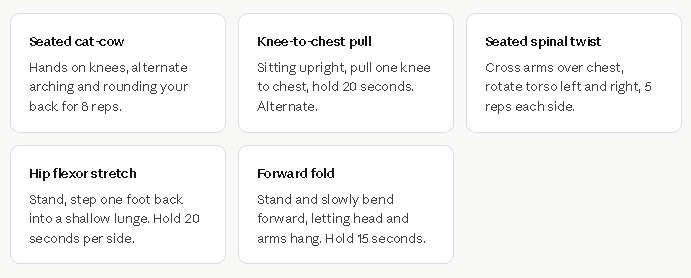
Method 3 — 5 Lower Back Stretches You Can Do at Your Desk
These stretches take under 4 minutes and can be done in any office without drawing attention.
Method 4 — Strengthen Your Core to Protect Your Lower Back Long-Term
Here’s what most people miss: lower back pain in middle age is often a core strength problemThe deep abdominal muscles act as a natural brace for the spineWhen they’re weak from years of desk work, the lower back overcompensates — and pain follows.
Just 10 minutes of core work, 3 times a week, can significantly reduce lower back pain episodes for middle-aged office workers within 6–8 weeksStart with the dead bug exercise, bird dog, and glute bridges — all floor-based, low-impact, and highly effective for spinal stability.
Method 5 — Apply Heat or Cold at the Right Time
Knowing when to use heat vscold is a small detail with a big difference in recovery speed.
Cold (first 48 hours)
After a flare-up: apply ice wrapped in cloth for 15 minutes to reduce inflammation.
Heat (chronic ache)
For ongoing stiffness: a heating pad on low for 20 minutes relaxes tight muscles and improves circulation.
Middle-aged adults often deal with chronic, low-grade lower back pain rather than acute injury — which means heat therapy is usually the right first choice.
Method 6 — Reassess Your Daily Habits Outside the Office
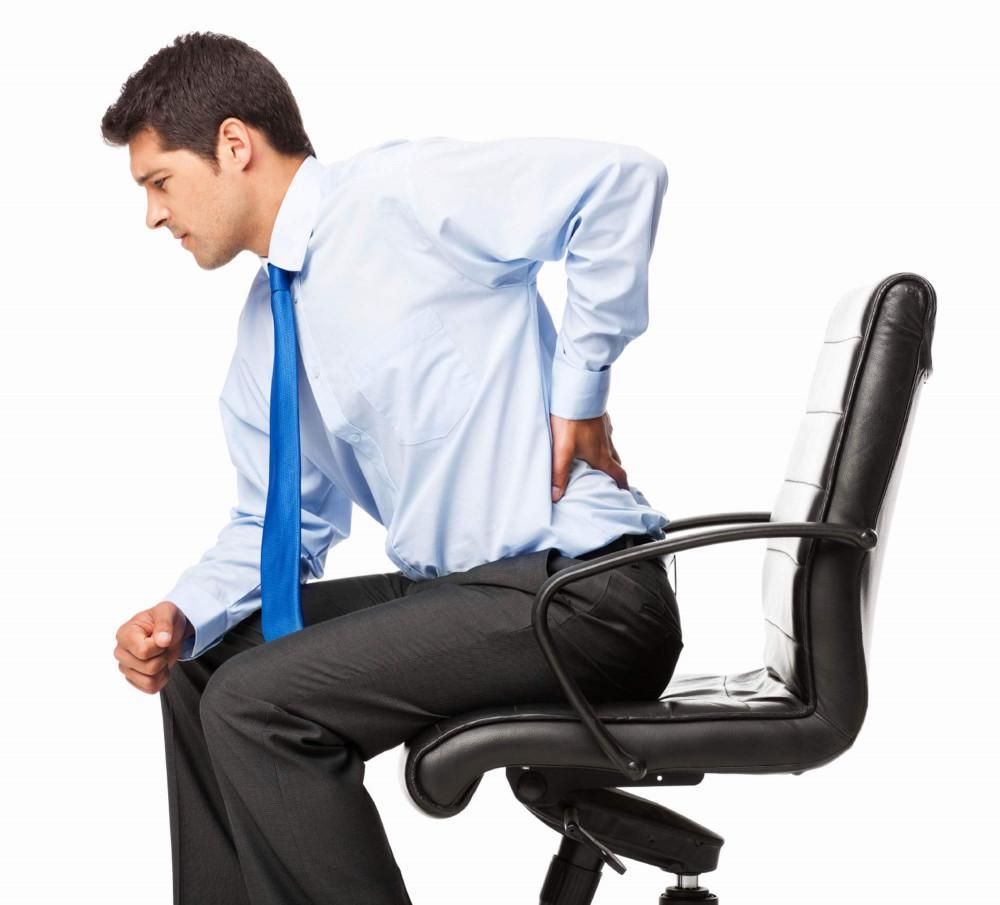
Lower back pain from sitting isn’t just a work problemSleep position, footwear, and how you carry bags all affect spinal healthFor middle-aged workers, sleeping on your side with a pillow between your knees can reduce overnight disc pressure considerablyWearing supportive footwear on long commutes — not dress shoes — makes a measurable difference over months.
Method 7 — When to Stop Self-Help and See a Professional
Self-help methods are effective for most middle-aged office workers with typical sitting-related lower back painHowever, you should consult a doctor or physiotherapist if:
! Pain radiates down one or both legs (possible disc herniation or nerve compression).
! Pain is severe and persists beyond 2 weeks despite rest and self-care.
! You experience numbness, tingling, or weakness in the legs.
! Pain wakes you from sleep consistently.
Summary: What Middle-Aged Office Workers Should Remember About Lower Back Pain
Lower back pain from sitting for long periods is not inevitable — and for middle-aged professionals, it’s very treatable without medication or surgeryHere’s a quick recap:
- Sitting compresses spinal discs; middle-aged bodies recover more slowly, making prevention essential.
- Fix your workstation first — an ergonomic setup removes the root cause.
- Break sitting time every 30 minutes — small movement beats long inactivity.
- Combine daily desk stretches with 3x-weekly core strengthening for lasting relief.
- Use heat for chronic stiffness, cold for acute flare-ups.
- Know when to escalate to a professional — some symptoms require medical attention.
The key insight for middle-aged office workers is this: the back doesn’t fail because you work too hardIt fails because it doesn’t move enoughStart smallBe consistentYour spine will thank you.
Lower back pain from sitting all day is often caused by long periods of static posture, weak core muscles, and poor workplace ergonomicsSmall daily adjustments can significantly reduce discomfort over time.
You might like :
- Sustainable Weight Loss for Adults Over 40: A Realistic Guide That Actually Works
- Why Midlife Stress Often Leads to Weight Gain
- The Quiet Truth About Starting Over at 40
- Why Sleeping Alone Doesn’t Relieve Your Fatigue After 40
- How Stress Slowly Drains Your Energy After 40 — And What You Can Do About It
- The Midlife Reset Guide: Reinvent Yourself After 40 Without Starting From Zero