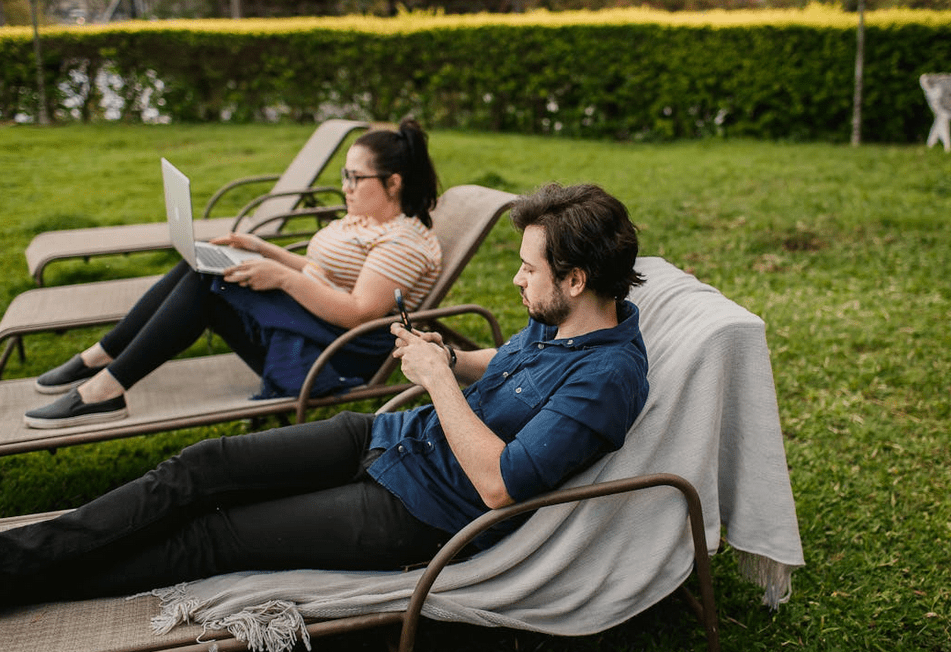
A real conversation for anyone over 40 who’s quietly wondering if there’s still another way.
Nobody tells you that somewhere around 43 or 47, you’ll sit in a work meeting — nodding, saying the right things — and feel like a stranger in your own life.
Not angryNot dramaticJust… hollow.
And the question starts creeping in, usually late at night or during your commute: Is this it? Is this really what the next twenty years look like?
If that question has been living rent-free in your head, you’re not brokenYou’re just finally paying attention.
The Weight Nobody Warns You About
There’s a specific kind of exhaustion that settles in after 40It’s not just physical tiredness, though that’s real tooIt’s the exhaustion of performing a version of yourself that no longer quite fits.
You wake upYou get readyYou show upYou produceYou come homeYou try to be present for the people who need youYou go to sleep and do it again.
Somewhere in that loop, the question of what you actually want gets quieter and quieter until you almost can’t hear it anymore.
For a lot of people in midlife, work is where this heaviness is most visibleBecause work takes so much of you — your hours, your energy, your identityAnd when the work stops feeling meaningful, or when the environment turns corrosive, or when the commute starts feeling like a small daily punishment — everything else gets harder too.
This is why the conversation about remote work vstraditional full-time employment matters so much for people over 40It’s not really about office policies or laptop setupsIt’s about whether there’s a way of working — and living — that leaves room for you to actually breathe.
What Traditional Employment Does to You After Forty
Let’s be honest about something the professional world doesn’t like to say out loud.
Office culture is often designed for people in their twenties and early thirtiesThe open plans, the performative busyness, the expectation that you’ll eat at your desk and look grateful for it — none of that was built with a 46-year-old in mindSomeone who has responsibilities, health considerations, a complicated personal history, and a deeply human need for some autonomy over their own time.
Full-time office jobs can offer stabilityThat part is realA steady paycheck, benefits, a structure that tells you where to be and whenFor some people, that structure is genuinely helpfulIt provides a rhythm to the day, a sense of belonging, maybe even real camaraderie.
But for others — especially those who’ve been doing it for twenty years — the structure starts feeling less like a framework and more like a cage.
The politics get harder to stomachThe younger managers get harder to relate toThe performance reviews feel increasingly disconnected from anything realAnd the feeling of being seen — of having your experience and wisdom actually valued — becomes rarer.
There’s also the commuteNot just the time it takes, but what it costs emotionallyAn hour each way is ten hours a week, five hundred hours a yearThat’s time that could have been spent cooking dinner slowly, going for a walk, reading, sleeping, or just sitting quietly without anyone needing anything from you.
This isn’t a complaintIt’s an accounting.

What Remote Work Actually Feels Like — And What It Doesn’t Tell You
Remote work has been romanticized in ways that aren’t entirely fair.
The coffee shop laptop photosThe “work from anywhere” lifestyle contentThe idea that if you just untether yourself from an office, everything gets lighter and more meaningful.
Sometimes it doesBut not alwaysAnd not automatically.
What remote work genuinely offers middle-aged people is agency over the texture of your dayThat’s not a small thingWhen you can decide to take a walk at 2pm because your brain is full and you need to move — and then come back and finish what you were working on at 4pm — that flexibility can feel like being handed a piece of your life back.
When you can eat actual food at a real table instead of whatever you grabbed from a vending machine between meetings.
When the ambient noise of an open-plan office isn’t scrambling your concentration every twenty minutes.
For people in midlife who are dealing with health shifts, caretaking responsibilities, aging parents, or just the very reasonable desire for a bit more quiet — remote work can be genuinely transformative.
But.
It can also be isolating in ways nobody prepares you for.
The casual connections you didn’t know you valued — the quick conversation in the hallway, the shared eye-roll about something ridiculous in a meeting, the sense of being physically among people — those disappearAnd for some people, that disappearance lands harder than they expected.
Remote work asks you to be disciplined, self-motivated, and comfortable with significant amounts of solitudeNot everyone is built that wayNot everyone should have to be.
Real People, Real Choices
Sandra, 48, former marketing director
After her company restructured — the third time in five years — Sandra negotiated a remote arrangement with a smaller agencyShe thought it would fix thingsIn some ways, it didShe stopped dreading Monday morningsShe started cooking againShe went to her daughter’s school events without having to file requests in advance.
But she also found herself eating lunch alone in her kitchen every day for months without realizing it was affecting her moodShe had to deliberately build back some human connection — a weekly coffee with a friend, a co-working space twice a week — before the remote setup felt sustainable.
“It wasn’t the magic fix I’d imagined,” she said“But it was still betterI just had to learn what I actually needed.”
Marcus, 52, IT project manager
Marcus tried remote work during the pandemic like everyone else, and hated itNot because he loved the office, but because his home life made concentration almost impossible, and he genuinely missed the problem-solving energy of being physically present with his team.
When given the choice to stay remote or return, he went backHe negotiated one day a week from home as a compromise.
“I know myself,” he said“I need the separationI need to leave and come backThat’s just how I’m wired.”
Elena, 44, graphic designer
Elena left a full-time agency job two years ago to go fully remote and freelanceShe won’t say it’s been easyThe income unpredictability is realThe self-promotion, the client management, the loneliness of some weeks — all of it is real.
But she also says she hasn’t felt this much like herself in almost a decade.
“I forgot I had opinions,” she said“At the agency, I’d just adapt to whatever they neededNow I remember I actually care about design.”
The Questions Worth Sitting With
Before you decide which path makes more sense for your life right now, there are some things worth asking yourself — not in a productivity-worksheet way, but genuinely, in the quiet.
What do you actually miss most about work when you imagine leaving it? If the answer is the people, that tells you something important about what you need from any arrangement.
What costs you the most energy each day at your current job? Is it the work itself, or the environment around the work? These have different solutions.
What does your body do on Sunday evenings? That involuntary dread, if it’s there, is information.
When did you last feel genuinely good at something — and what were the conditions around you when that happened? You might be surprised what you remember.
These aren’t questions you have to answer right nowBut they’re worth carrying around for a while.
What Middle Age Actually Changes About Work — The Part Nobody Names
Here’s something that doesn’t get said enough.
After 40, most people aren’t just dealing with work questionsThey’re dealing with identity questions that the work question is sort of standing in front of.
The career dissatisfaction is realBut underneath it, a lot of people are quietly asking: Who am I now? What do I actually value? Did I spend the last twenty years building someone else’s vision of a good life?
That’s a profound and disorienting thing to wake up toAnd no amount of remote work or office redesign fully answers it.
But the conditions in which you work can either make space for you to explore those questions, or they can make it nearly impossible.
An environment that grinds you down — that leaves you depleted, humiliated, invisible, or chronically exhausted — doesn’t leave much room for the kind of reflection that midlife is quietly asking you to do.
An environment with more autonomy, more breathing room, more alignment with how you actually function — that can open a small doorNot to instant clarity, but to the possibility of it.
The Financial Reality That Can’t Be Ignored
Let’s not pretend that philosophy pays the mortgage.
For many people over 40, financial pressure is a constant undercurrentKids in schoolAging parents needing supportThe feeling that there’s never quite enough buffer between you and crisisThe realization that retirement is closer than it used to be and the savings aren’t where you thought they’d be.
These are real constraintsAnd they matter to this conversation.
Remote work — especially if you’re considering freelance or contract arrangements — carries real financial riskIncome can be unpredictableBenefits you’ve taken for granted in employment (health insurance, retirement contributions, paid leave) become things you have to navigate yourselfThe upside potential can be significant, but the floor can also feel very low.
Full-time employment, even when it’s soul-flattening, often provides a kind of security that matters enormously when you have real financial obligations.
This is not an argument for staying miserableIt’s an argument for being honest with yourself about what you actually need — and building toward change in a way that doesn’t require gambling with your security.
A lot of people who successfully transition to remote or flexible work in midlife don’t do it all at onceThey negotiate within current roles, they test the waters with side work, they build savings before making a full leapThe slow path is not the cowardly pathSometimes it’s the wise one.
Finding the Middle Ground
The binary — full-time office job vsremote work — is a bit of a false choiceThe real question is: what working conditions allow you to do good work and remain recognizably yourself?
For some people, that’s a hybrid arrangement that provides structure while still giving back some of the time that used to disappear into commuting.
For others, it’s staying in a traditional role but finally letting themselves set better limits around availability, travel, and after-hours expectations.
For others still, it’s a genuine leap into something new — a different industry, a different employment structure, a different relationship with income altogether.
None of these paths is wrongAll of them require something: honesty about what you need, some courage to name it, and probably some patience while things slowly adjust.
On the Fear of Starting Over
One of the heaviest things about midlife decisions — career or otherwise — is the fear that it’s too lateThat starting over means admitting some kind of failureThat other people will judge the pivot, the change, the admission that what you were doing wasn’t working.
Can we sit with that fear for a second instead of rushing past it?
The fear is understandableChange is genuinely harder with more at stakeAnd there’s grief in admitting that a path you invested in hasn’t been feeding you the way you hoped.
But here’s what’s also true: forty-something is not oldIt is, statistically and experientially, roughly midpointThe people who make meaningful changes in their forties often look back at fifty or fifty-five and feel like it was the best thing they did — not because everything became easy, but because they stopped pretending.
Staying somewhere that slowly empties you out, because the alternative seems too uncertain — that has a cost tooIt just tends to be a cost that accumulates quietly, under the surface, until one day it surfaces all at once.
A Gentle Way Forward
If you’re reading this and feeling a pull toward something different — but also feeling the weight of everything that makes change feel impossible — here’s what I’d offer gently.
You don’t have to make a dramatic move.
You can start by letting yourself want somethingEven quietlyEven without knowing what it is yet.
You can have one honest conversation — with a spouse, a friend, a therapist, yourself — about what’s actually going onNot what you’re supposed to say, but what’s real.
You can research, cautiously, what alternatives might look likeNot as a commitment to anything, but as permission to see that options exist.
You can ask your current employer for one thing — more flexibility, fewer meetings, the occasional work-from-home day — and see what happensSometimes the conversation you’ve been most afraid to have is easier than you thought.
And if none of that feels possible right now, you can simply let yourself acknowledge, honestly, that this is hardThat you’re tiredThat you deserve better conditions than you’ve been working in.
That acknowledgment, small as it seems, is not nothing.
Sometimes knowing that you’re not being dramatic — that your exhaustion is real, that your dissatisfaction is legitimate, that the life you’ve been living has genuinely been harder than it needed to be — is the first thing that moves.
Closing: You’re Still Becoming Someone
Here is the thing about being over 40 that the culture often misses entirely.
You are not finished.
You are not in declineYou are not too lateYou are not someone who had their chance and missed it.
You are a person with twenty or thirty more working years ahead, with experience that actually means something, with a self-knowledge that younger people simply don’t have yetAnd you are trying to figure out how to spend that time in a way that doesn’t hollow you out.
That’s not a midlife crisisThat’s wisdom starting to ask for what it needs.
Whether the answer for you is remote work, traditional employment, something hybrid, something entirely different — the question itself is worth taking seriouslyNot as a crisis, but as an invitation.
The invitation to stop arranging your life around what was expected of you, and to start — slowly, carefully, honestly — building something that fits who you’ve actually become.
That’s not starting over.
That’s finally starting.
You might like :
- Should a 40-Year-Old Keep the Stable Job — or Finally Start That Side Hustle?
- Changing Careers at 40:Stability or Risk?
- Midlife Career Change Over 40: What Works and What Wastes Your Time
- How I Escaped Burnout and Started Making Money Online After 40
- Best Online Jobs for People Over 45: Real Ways to Earn Without Starting from Zero
- Midlife Career Change Over 40: How to Restart Your Life Without Starting From Zero