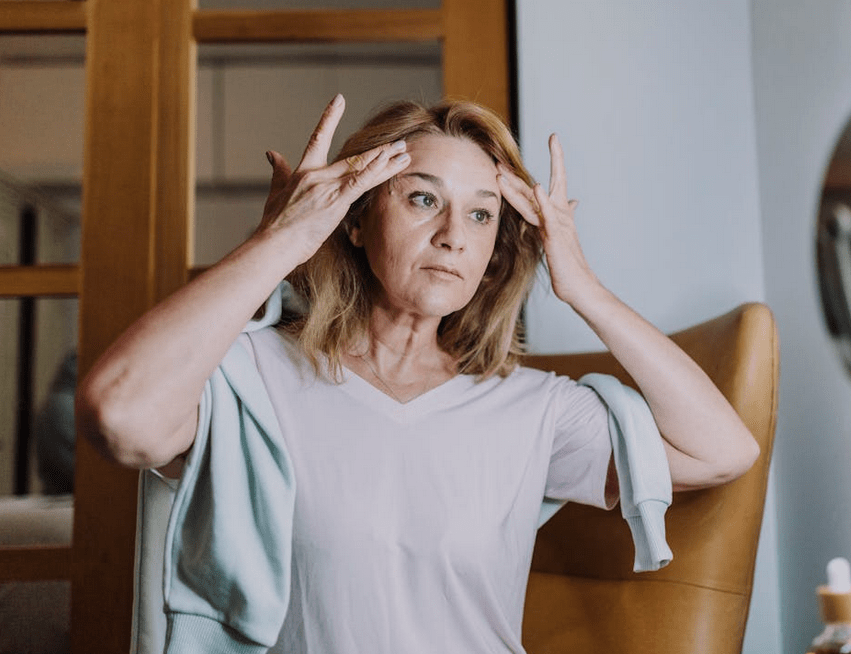
Something shifts after 40The tiredness isn’t just physicalIt’s the kind that sits in your chest at 2am when you can’t sleep even though you’re completely exhaustedIt’s the kind that makes you stare at your calendar and feel nothingWomen in their 40s are burning out at rates nobody talks about openly — and it’s not weakness, it’s mathYears of overworking, underpaying yourself, absorbing everyone else’s stress, and quietly postponing your own life adds upThis article talks about why that exhaustion hits so suddenly after 40, what’s actually driving it beyond hormones, and why so many women at this stage are starting to quietly rethink everything — their jobs, their income, their time, their life.
She had a good jobTwo kidsA mortgage she was managing.
From the outside, everything looked fine.
But every Sunday night, she felt this low-grade dread settle into her stomachNot panicJust this flat, grey feelingLike she was already tired before the week had even started.
She was 43.
She kept telling herself it was hormonesOr stressOr just getting older.
But it wasn’t just that.
Something had shifted, and she couldn’t name itNot yet.
The Tiredness That Doesn’t Go Away With Sleep
This is the thing about exhaustion after 40It’s not fixed by a good night’s sleep.
You sleep eight hours and wake up tiredYou take a vacation and come home already counting down to the next oneYou get through the week but you can’t remember what you actually did.
It feels like running on a treadmill that’s set just slightly too fast.
Not fast enough to fallBut fast enough that you never, ever catch your breath.
This kind of tired isn’t about your iron levels or your thyroid — though those are worth checkingThis is something differentThis is the accumulated weight of years spent doing everything for everyone else while quietly setting yourself aside.
Doctors don’t have a blood test for that.
What’s Actually Happening After 40
There’s a convergence that happens in your early-to-mid 40s that almost nobody prepares you for.
Hormonally, yes, things are shiftingPerimenopause can start as early as 38 or 39 for some womenSleep gets disruptedBrain fog creeps inEnergy regulation changesYour body genuinely does not respond the same way it did at 32.
But that’s only part of it.
The rest is situationalAnd situational is actually harder to fix.
The sandwich years hit hard.
Many women in their 40s are simultaneously raising children who still need them, supporting aging parents who need them more, holding down jobs that have expanded in scope without expanding in pay, and managing households that don’t stop needing managing.
There is no natural pause point in that schedule.
There’s no moment where the world says, “You’ve done enough for todayYou can stop now.”
So you don’t stopYou just get more tired.
The career math stops working.
You’ve been at this for 15 or 20 yearsYou’ve done the workYou’ve put in the hoursYou’ve been reliable, diligent, professional.
And yet you’re looking at your paycheck, your savings account, your retirement projections, and something doesn’t add up.
Women in their 40s frequently describe this specific feeling: the sudden, nauseating awareness that they have been working very hard for a very long time and they are not where they thought they would be.
Not financiallyNot professionallyNot personally.
It’s not failureIt’s the gap between expectation and reality hitting all at once.
The invisible work calculus.
Women disproportionately absorb what researchers call “invisible labor” — the mental load of running a household, managing family logistics, emotional caretaking, social coordination.
None of this shows up on a job descriptionNone of it is compensatedAll of it is exhausting.
40, the accumulated cost of this labor is real and physicalIt lives in your bodyIn your sleepIn the way you get to Thursday and feel like you simply have nothing left.
The Specific Kind of Burnt Out That Happens at This Age
Burnout in your 40s looks different from the burnout of your 20s.
In your 20s, burnout often came from doing too much and not knowing your limits yetYou recovered with a week off and some sleep.
In your 40s, the burnout is quieter and more entrenched.
It looks like this:
You’re not necessarily miserableYou’re just flatTasks that used to energize you feel like obligationsWork that used to feel meaningful now just feels like something you show up toYou do it well because you always do it wellBut something behind your eyes has gone very still.
You catch yourself doing a strange kind of math in your headHow many more years until retirement? Can I actually last that long? If I left tomorrow, what would I even do?
This is not a midlife crisis in the dramatic, convertible-buying sense.
This is a reckoning.
A quiet, rational look at the next 20 years and a genuine question: Is this how I want to spend them?
Why So Many Women Start Questioning Everything Around This Age
There’s a reason midlife reinvention isn’t just a clichéThere’s something genuinely activating that happens for women in their 40s — once the exhaustion gets bad enough that ignoring it stops being an option.
Part of it is the horizon shift.
At 25, retirement feels abstractAt 42, it’s starting to feel possible — and the gap between where you are and where you need to be becomes very concrete, very fast.
Part of it is watching other people make changes.
Someone in your orbit leaves a corporate jobSomeone starts a small businessSomeone takes a contract roleSomeone you went to school with is working remotely from Portugal.
You don’t necessarily want exactly what they haveBut you notice something light up in you when you hear about it.
That noticing matters.
Part of it is the body demanding change.
The exhaustion after 40 is not always subtleSometimes it is absolutely insistentIt will not let you run from it the way you used toYou can’t just push through on willpower anymoreYour body actually forces the question: What are we doing, and why?
The Financial Layer Nobody Talks About Honestly
Here’s the uncomfortable part.
A lot of the exhaustion women feel at this age has a direct financial component that is really hard to admit out loud.
The job that’s burning you out? You feel like you can’t leave it because you need the income, the health insurance, the stability.
The savings shortfall? You’re quietly panicking that you haven’t done enough, that you started too late, that you’re not going to be okay.
The wage stagnation? You’ve absorbed years of raises that didn’t keep pace with inflation, roles that expanded without title changes, loyalty that wasn’t particularly rewarded.
This financial anxiety lives under the surface of a lot of midlife exhaustion.
It’s not just tiredIt’s trapped-tired.
And that combination is particularly corrosive, because the thing that’s draining you is also the thing you feel you can’t walk away from.
One thing that helped a woman I know was genuinely auditing what her time was worth outside of her day job — not to quit immediately, but just to see what was possibleShe’d spent so long thinking her only income option was her employerTurns out there were things she’d been doing for free for years that people actually paid for.
The financial piece of midlife burnout doesn’t have one answerBut the worst thing you can do is not look at it at all, because the not-looking is part of what’s exhausting you.
What Perimenopause Actually Does to Your Energy (And Your Brain)
Let’s name this clearly, because it matters.
Perimenopause begins, on average, in the mid-to-late 40s — but it can start in the late 30s for some women, and it is not the same as menopauseIt’s the transition period, and it can last a decade.
During perimenopause, estrogen and progesterone fluctuate unpredictablyThis affects sleep architecture — particularly the deep, restorative stages of sleepIt affects mood regulationIt affects cognitive function in ways that women often describe as “not feeling like themselves.”
Brain fog is realWord retrieval slowing down is realWaking at 3am with your heart pounding is real.
This is not you falling apartThis is your endocrine system going through a significant transition while you are also expected to perform at full capacity at work, at home, and everywhere else.
The combination of hormonal disruption and situational exhaustion compounds in ways that are genuinely, measurably hard.
Which means: if you are a woman in your 40s who feels unaccountably tired, genuinely cannot concentrate the way you used to, wakes up at 3am ruminating, and cries in the car on the way to work — you are not being dramatic.
Your experience is physiologically and situationally explainable.
That doesn’t fix itBut it helps to know it’s real.

The Identity Piece
There’s something else happening at this age that doesn’t get enough airtime.
Women in their 40s often hit a quiet identity crisis that isn’t dramatic but is deeply disorienting.
For years — maybe decades — identity was structured around clear rolesParentEmployeeSpouseDaughterYou knew who you were in relation to other people, in relation to your job title, in relation to what you were supposed to be doing next.
And then something softens, or shifts, or drops away.
The kids need you differently nowThe job doesn’t define you the way you thought it wouldThe path you were following has gotten blurry.
And the question that surfaces — who am I when I’m not performing all these roles — is genuinely destabilizing.
This is not an existential crisis that requires you to sell everything and move to Bali.
But it is a real questionAnd sitting with it — actually sitting with it instead of scheduling it away — is part of how you begin to move through this period.
The exhaustion is sometimes the body’s way of refusing to keep performing a version of yourself that no longer fits.
What Actually Starts to Help
Not a morning routineNot a productivity hack.
Here’s what actually seems to matter for women navigating this particular kind of exhaustion:
Letting the tiredness be information, not weakness.
The exhaustion is telling you somethingSomething about pacing, about values, about what’s no longer sustainableFighting it as an enemy often makes it worseGetting curious about what it’s signaling — even if that’s uncomfortable — tends to be more useful.
Separating the layers.
The hormonal piece needs medical attentionA doctor who takes perimenopause seriously — not just one who waves it away — can make a real difference in sleep, mood, and cognitive function.
The financial piece needs a clear-eyed look, not avoidanceEven a rough picture of where you are versus where you want to be gives you something to work with.
The career piece needs honesty about what you can actually sustain versus what you’re white-knuckling.
These are separate problems with separate solutionsConflating them into one undifferentiated mass called “my life is exhausting” keeps all of them stuck.
Reclaiming something small that’s actually yours.
Women at this stage often describe a version of this: they cannot remember the last time they did something purely for themselvesNot for productivityNot for their kidsNot to improve their careerJust something they actually wanted.
That sounds smallIt’s not smallThe erosion of personal agency — even in small things — is cumulative.
One woman described starting a very small freelance project in the evenings — writing, which she used to love and had given up — and said it felt like opening a window in a room that had been shut for yearsShe wasn’t making much at firstBut she was making somethingAnd that distinction mattered more than she expected.
Infuse your future with more peace →
Actually resting — not scrolling, not numbing, resting.
This is harder than it soundsMany women in this stage of life are so conditioned to productivity that actual rest triggers guiltLying downNot consuming anythingNot organizing anythingJust stopping.
The nervous system needs thisAnd for a lot of women, actually doing it — permitting it — is a form of unlearning.
On the Question of Starting Over
There’s a version of this conversation that people rush too quickly into: Just reinvent yourself! Start something new! It’s never too late!
And while all of that can be true, the rushed inspirational version of it is irritating and not helpful.
Because starting over after 40 is complicated.
There’s real financial riskReal dependentsReal obligationsReal fear about healthcare and retirement and what happens if it doesn’t work.
Dismissing those concerns with “you’ve got this!” language doesn’t serve anyone.
What’s actually true is more nuanced.
Many women who have rebuilt their income or changed their careers in their 40s didn’t do it by leaping off a cliffThey did it by building something on the side, slowly, before letting go of the main thing.
They kept the job while taking the courseThey kept the salary while freelancing on weekendsThey kept the stability while quietly making an exit route.
That’s not cowardiceThat’s practical intelligence.
There are communities of women doing exactly this — not influencers selling a lifestyle, but actual 44-year-olds working day jobs and building something small and real on the sideFinding those people matters more than any five-step plan.
Find a more peaceful way to move forward →
The starting over doesn’t have to be dramatic to be real.
The Things That Don’t Help
Because this is a real article and not a wellness brochure:
Expensive supplements that promise to “restore your energy” don’t fix structural exhaustionA seven-day juice cleanse doesn’t address a job that’s consuming your lifeA new planner doesn’t resolve financial anxiety.
There is a whole industry built around selling solutions to tired women that don’t address the actual source of the tiredness.
The structural things — the job, the money, the unpaid labor, the hormonal upheaval, the identity questions — need structural responses.
That’s slowerLess marketableBut more honest.
What Women in Their 40s Are Actually Doing
Not the aspirational ones on InstagramReal ones.
Some are quietly building freelance income in their field — consulting, writing, designing — on evenings and weekendsNot to get richTo have an option.
Some are going back to school, not for a full degree, but targeted certifications in areas with actual market demand.
Some are having very honest conversations with their employers about workload, compensation, or remote flexibility — conversations they put off for years.
Some are partnering with other women in similar situations — sharing skills, splitting projects, creating small collaborative income.
Some are very deliberately doing nothing new for a whileJust stopping the accelerationGetting off the extra committeeSaying no to the volunteer roleReclaiming sleep.
There’s no one path.
But there is a common thread: at some point, the exhaustion becomes more motivating than the fear.
One Last Honest Thing
If you’re in this — the flat Sunday dread, the 3am spiral, the “how many more years of this” math — the thing nobody tells you is that the clarity usually doesn’t arrive all at once.
It comes in pieces.
A conversation that makes something clickA small decision that turns out to matter more than you expectedA morning where you feel, briefly, like yourself.
It’s not a montageIt’s not a breakthrough weekend.
It’s a slow, imperfect, very human process of figuring out what you actually need — and then, gradually, starting to build toward it.
That’s enough to begin with.
You might like :
- AI Side Hustles for Adults Over 40: The Complete Guide to Earning More Without Starting Over
- How to Slowly Achieve a Monthly Income of $1000 on a Single Website After Age 40
- How Long Does It Take for a Blog to Start Earning Money After 40?
- How Middle-Aged Women Can Start Over Without a Job — And Why It’s Not Too Late
- How Long Does It Take for a Blog to Start Earning Money After 40?
- Midlife Career Change Over 40: How to Restart Your Life Without Starting From Zero